Daily
operational visibility
Managers need a quick, live read on work in motion, not just month-end analysis.
The command center for serious service shops. Free to self-host, or $37 a month if you'd rather we host it.
Reports
Home Base reporting gives owners and managers a faster read on pressure, bottlenecks, and closeout risk across service, sales, parts, and quality.
Daily
Managers need a quick, live read on work in motion, not just month-end analysis.
Role
A tech, an owner, and a service manager should never land on the exact same homepage and call it useful.
Shared
The numbers come from the same system that runs the work, so managers are not reconciling today's floor against yesterday's spreadsheet.
Export
Print it, share it, or hand it to accounting when that actually helps the workflow.
Actual reporting
The reports hub and command center connect the deeper report families to the daily leadership read.
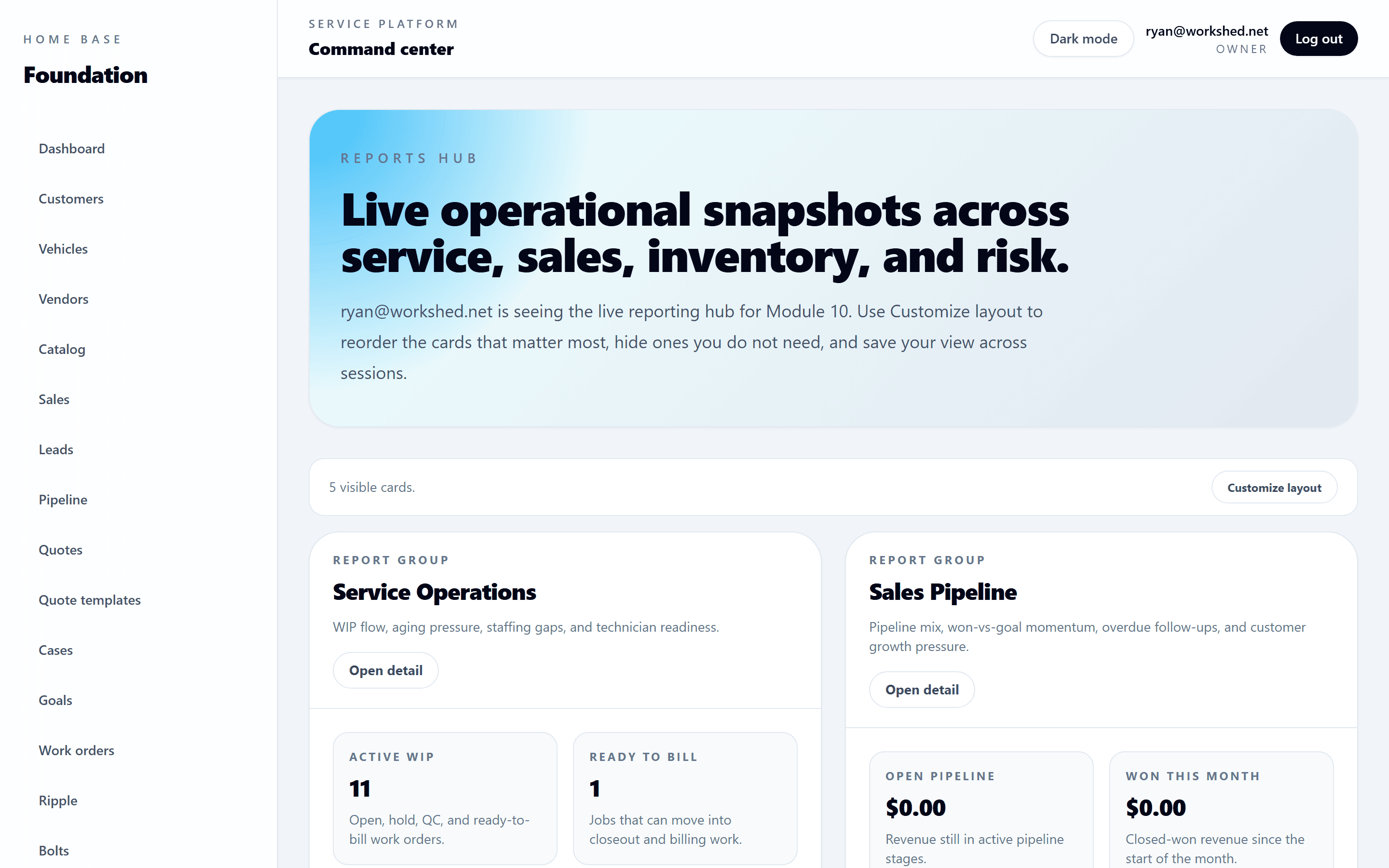
Reports hub
Managers can move between service, sales, inventory, and risk views without rebuilding a spreadsheet.
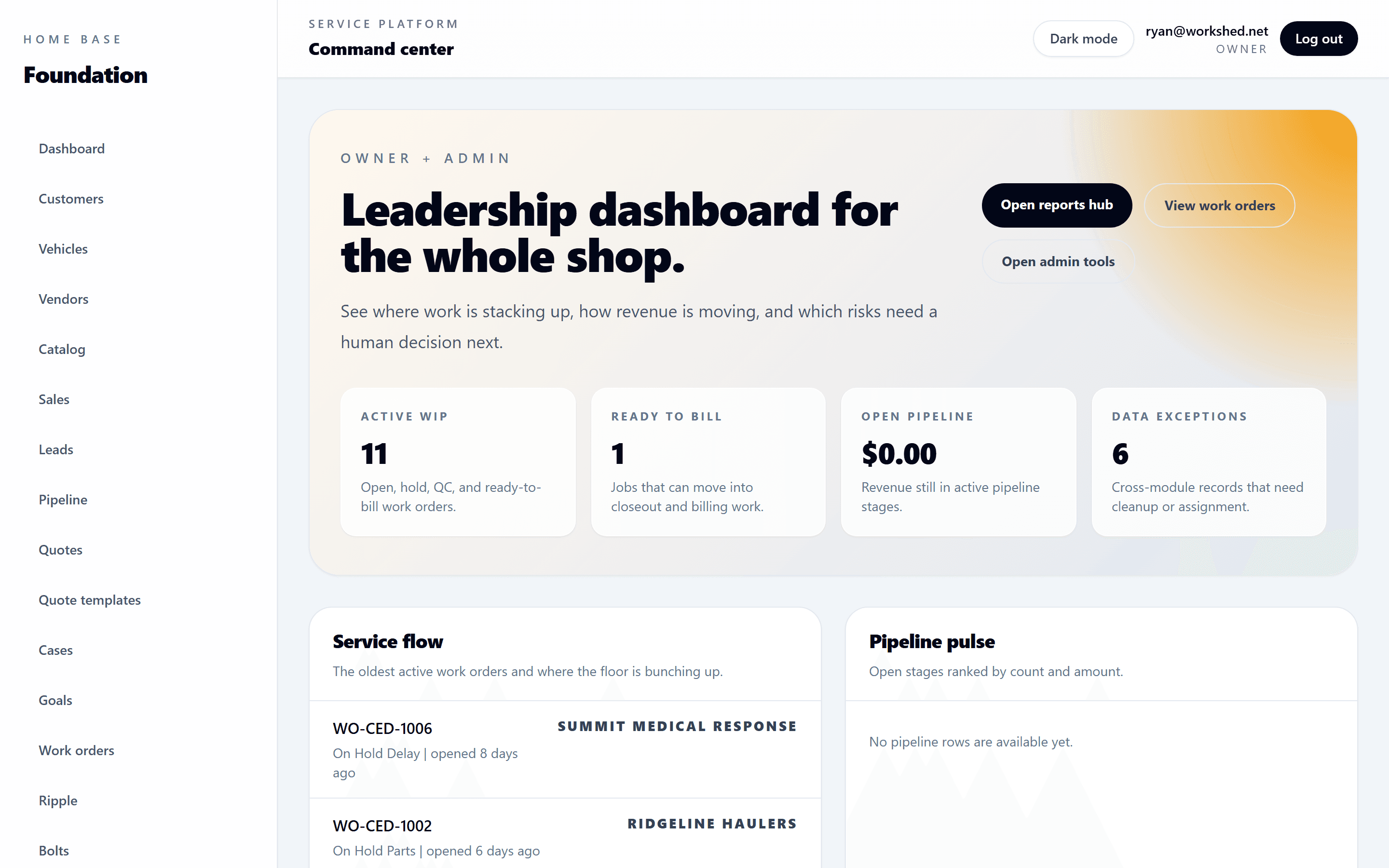
Leadership dashboard
The dashboard keeps the high-level state close to the work so managers can respond earlier.
Report families
This is the part of the product that should help the shop notice pressure early enough to do something about it.
Watch WIP aging, technician load, cycle time, QC pressure, and estimate drift before they become expensive.
Measure pipeline motion, rep follow-up pressure, goal attainment, and repeat-customer health.
Track stock risk, reservation flow, dead-stock candidates, and vendor responsiveness.
Keep an eye on ready-to-bill work, approvals, exceptions, inspections, and warranty recovery.
Cadence
Home Base helps the shop notice and respond earlier, not merely document the past more elegantly.
Morning
Role-aware dashboards should tell a manager where pressure is building before the day gets away from the shop.
Midday
Service, parts, and closeout reporting should point at what needs intervention right now, not just what happened yesterday.
Week
Cycle time, estimate drift, follow-up pressure, and other patterns matter when the product makes them easy to spot week after week.
Month
Exports and role-aware reports help the shop review what is improving, what is slipping, and what needs a decision.
Reports FAQ
A reporting page works when a manager can picture using it on a real day, not just admiring the charts.
That reporting helps the shop notice and act sooner, not just read nicer charts after the fact.
It uses shop language: WIP aging, closeout, follow-up pressure, stock risk, and QC load. The point is faster judgment, not abstract analytics.
Because owners, writers, managers, and parts teams do not need the same answers at the same time. Good dashboards respect that.