Read
the shop before acting
The first job of the assistant is understanding the operational context that already exists inside Home Base.
The command center for serious service shops. Free to self-host, or $37 a month if you'd rather we host it.
Gauge AI
Gauge is a serious in-product assistant: grounded in live shop context, helpful for drafting and lookup, and careful about permissions, confirmation, and auditability.
Read
The first job of the assistant is understanding the operational context that already exists inside Home Base.
Draft
The best posture for the site is assistant-first, with helpful outputs that still respect review and confirmation.
Role
Gauge feels trustworthy because it behaves like the rest of the product, not like a bypass around it.
Audit
A serious assistant leaves a record. That matters more in this category than flashy language does.
Actual Gauge surface
The assistant screens show the two things shops need to trust first: useful starting questions and visible conversation context.
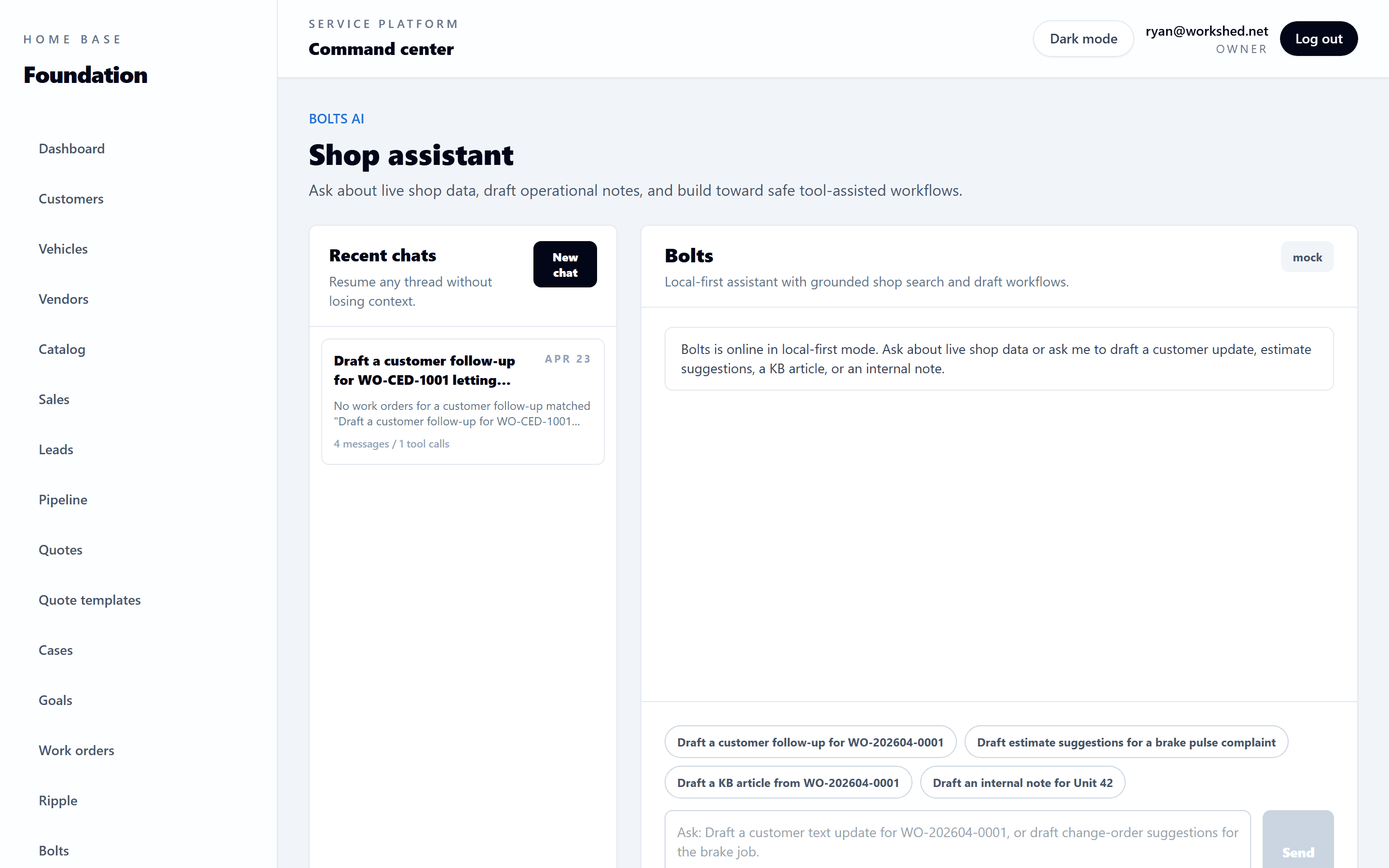
Gauge start
Suggestion chips show the kinds of operational questions the team can ask without leaving the workflow.
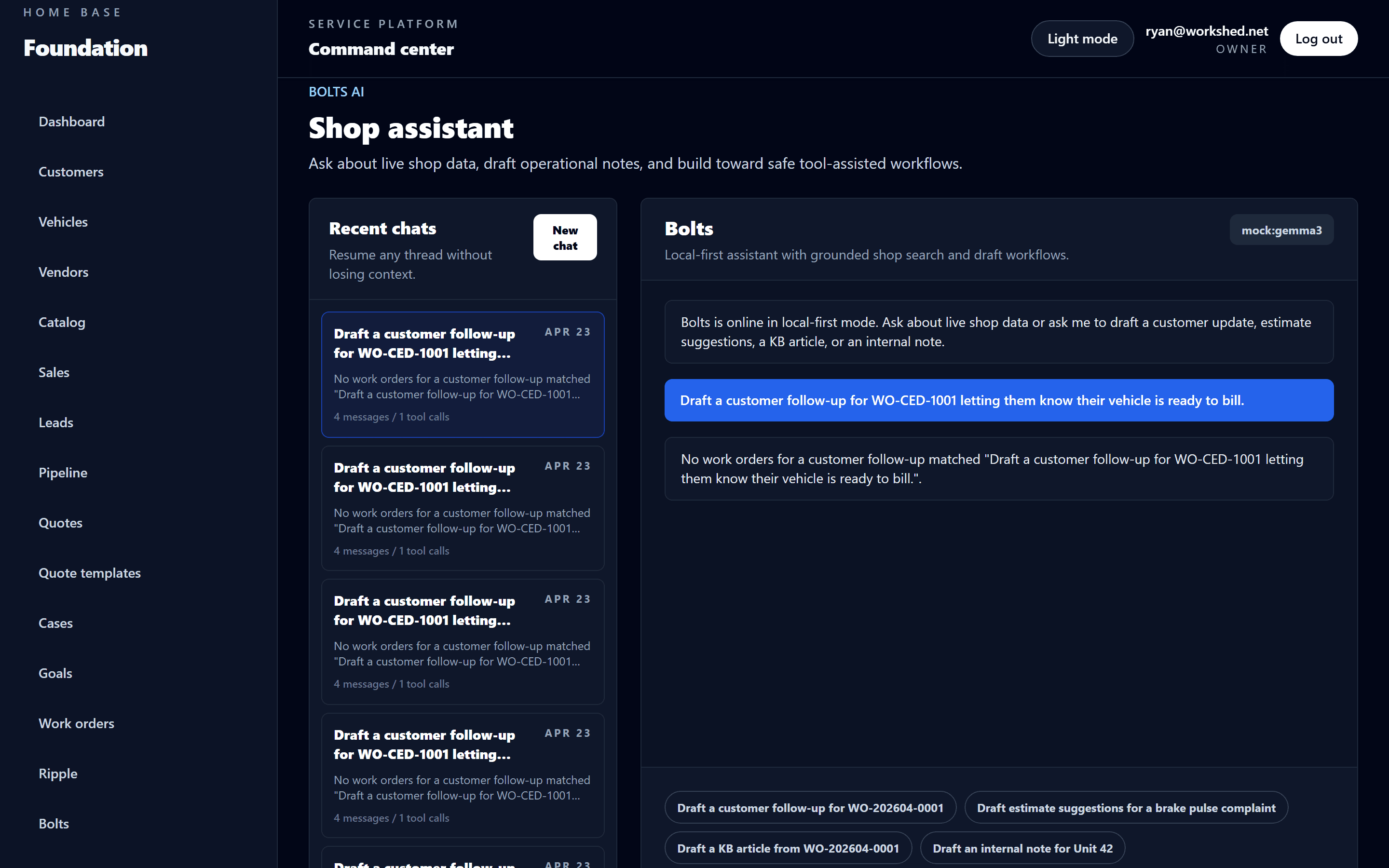
Conversation
The conversation view makes the assistant feel like part of the operating system, not a detached chatbot.
Promise
The strongest AI message here is that Home Base helps the team move faster without turning the product into a black box.
Gauge is meant to answer questions about customers, vehicles, estimates, parts, cases, and videos with real context.
The system helps prepare messages, notes, and draft changes before any write happens.
Every confirmed action follows the same role boundaries and audit expectations as the rest of the product.
What it does best
That balance is what makes the assistant feel believable in an operational product.
Help the team find status, history, availability, and context without making them click through five surfaces first.
Turn work-order reality into clear, reviewable updates that the team can refine before sending.
Suggest estimate lines, change-order drafts, or internal notes while keeping the final decision in human hands.
Persist tool calls and confirmed writes so the assistant feels like a serious operator inside the platform.
Gauge FAQ
Gauge works when the page answers skepticism with clear operational guardrails.
That it knows real shop context, respects roles, confirms important writes, and leaves an audit trail. Those signals matter more than vague AI superlatives.
Usually no. It is a differentiator, but Gauge works best as part of a serious operating system rather than as a floating AI feature.
Calm confidence. Gauge should feel useful, grounded, and controlled instead of flashy or speculative.