Lead
to closeout continuity
Sales activity, estimates, work orders, customer updates, and reporting feel like one spine.
The command center for serious service shops. Free to self-host, or $37 a month if you'd rather we host it.
Platform
Home Base connects intake, sales, work orders, customer communication, AI assistance, and reporting in one operating system.
Lead
Sales activity, estimates, work orders, customer updates, and reporting feel like one spine.
Role
Owners, writers, managers, techs, parts, and sales all need different views of the same operating reality.
Portal
Communication is not a sidecar. It is part of how the work gets approved and understood.
Reports
Reporting reinforces the operating system story instead of sitting off to the side as decoration.
Actual platform
The screenshots show the operating range directly: dashboard, work orders, job detail, quotes, catalog, and reporting.
Why it matters
These are real Home Base demo captures, not a stitched feature illustration.
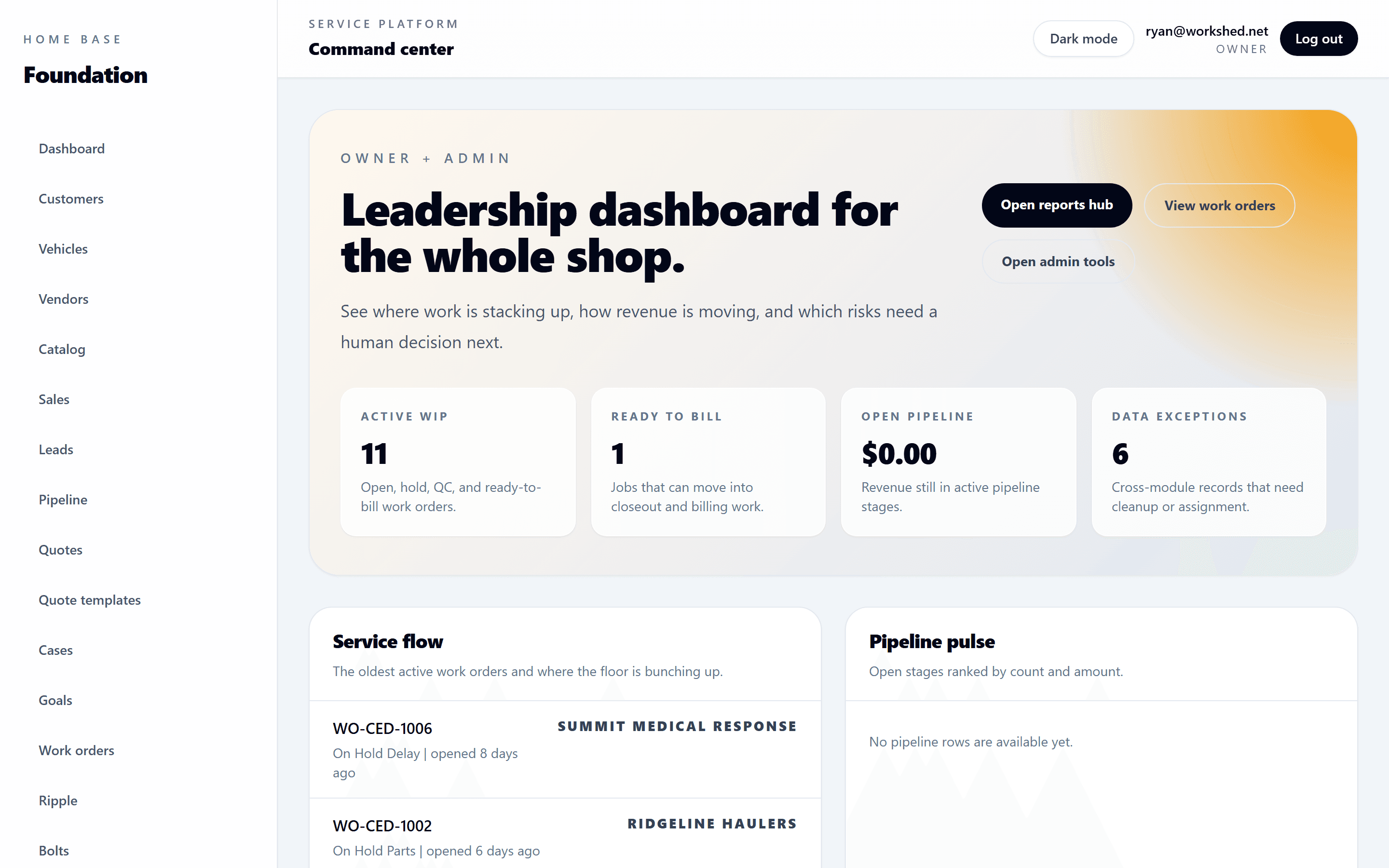
Command center
Active WIP, ready-to-bill jobs, pipeline pressure, and data exceptions sit in one leadership view.
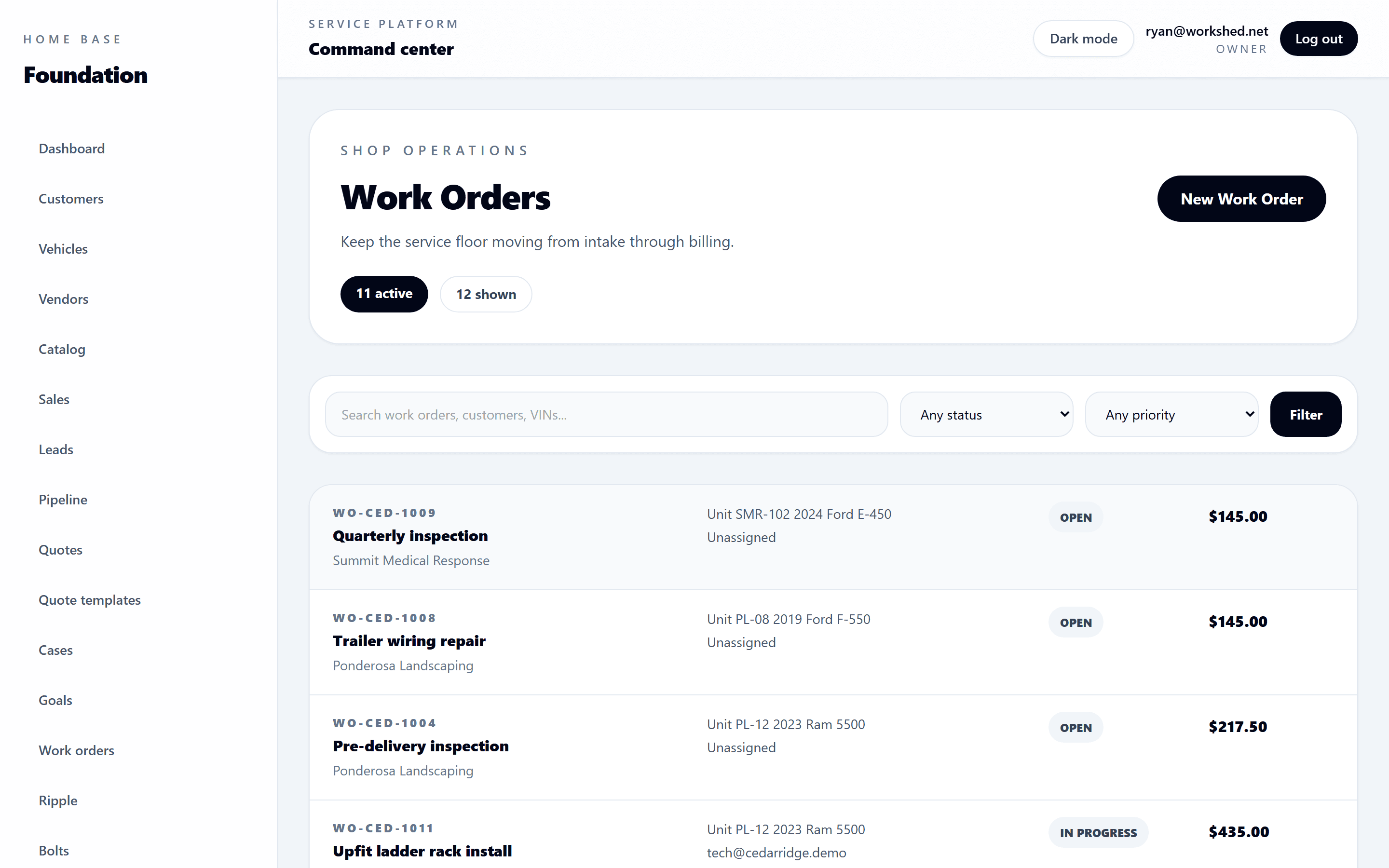
Work orders
Writers can scan jobs by status, vehicle, customer, assignment, and amount without rebuilding context.
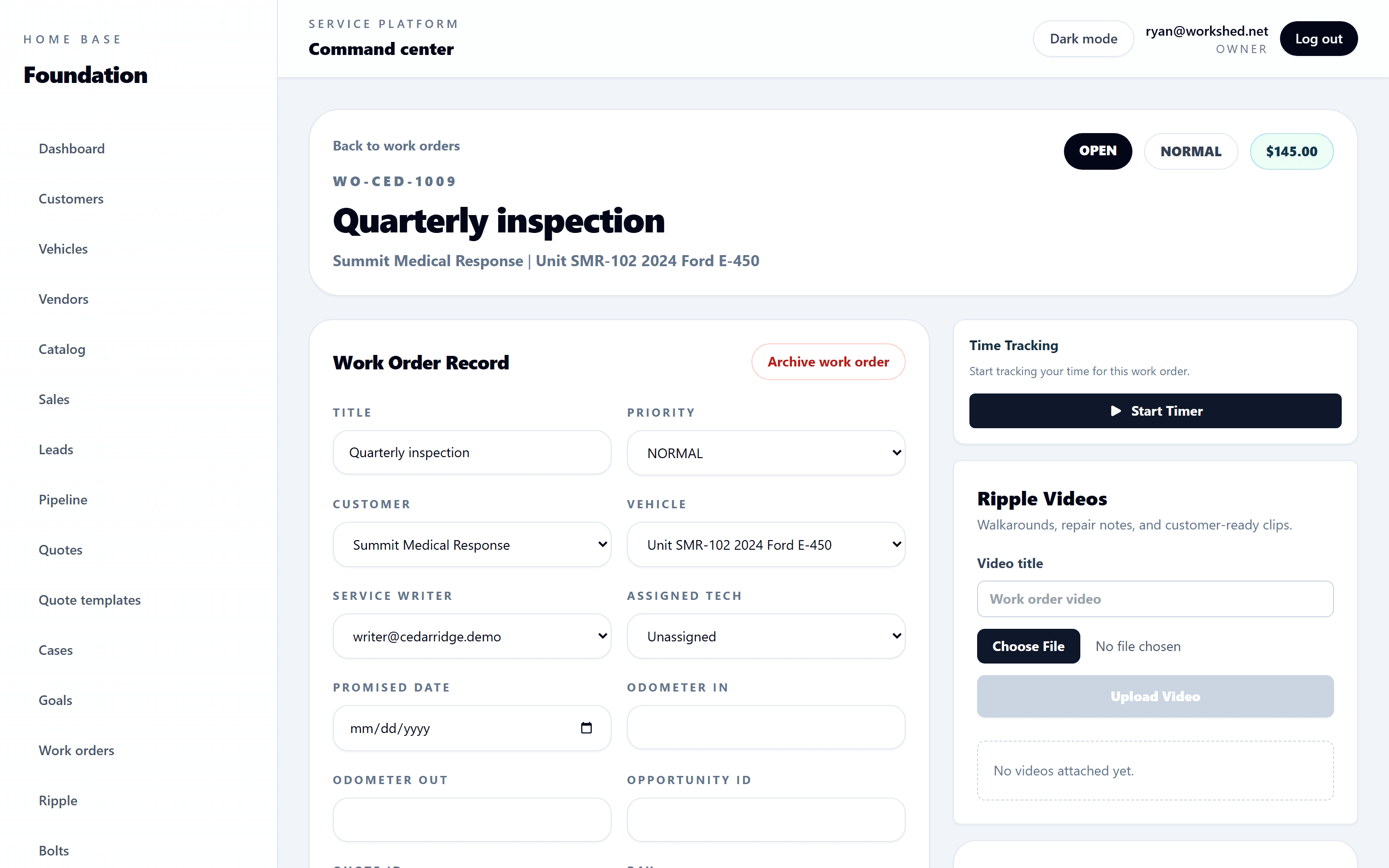
Job detail
The detail view gives the team a stable place for the work, customer context, and next action.
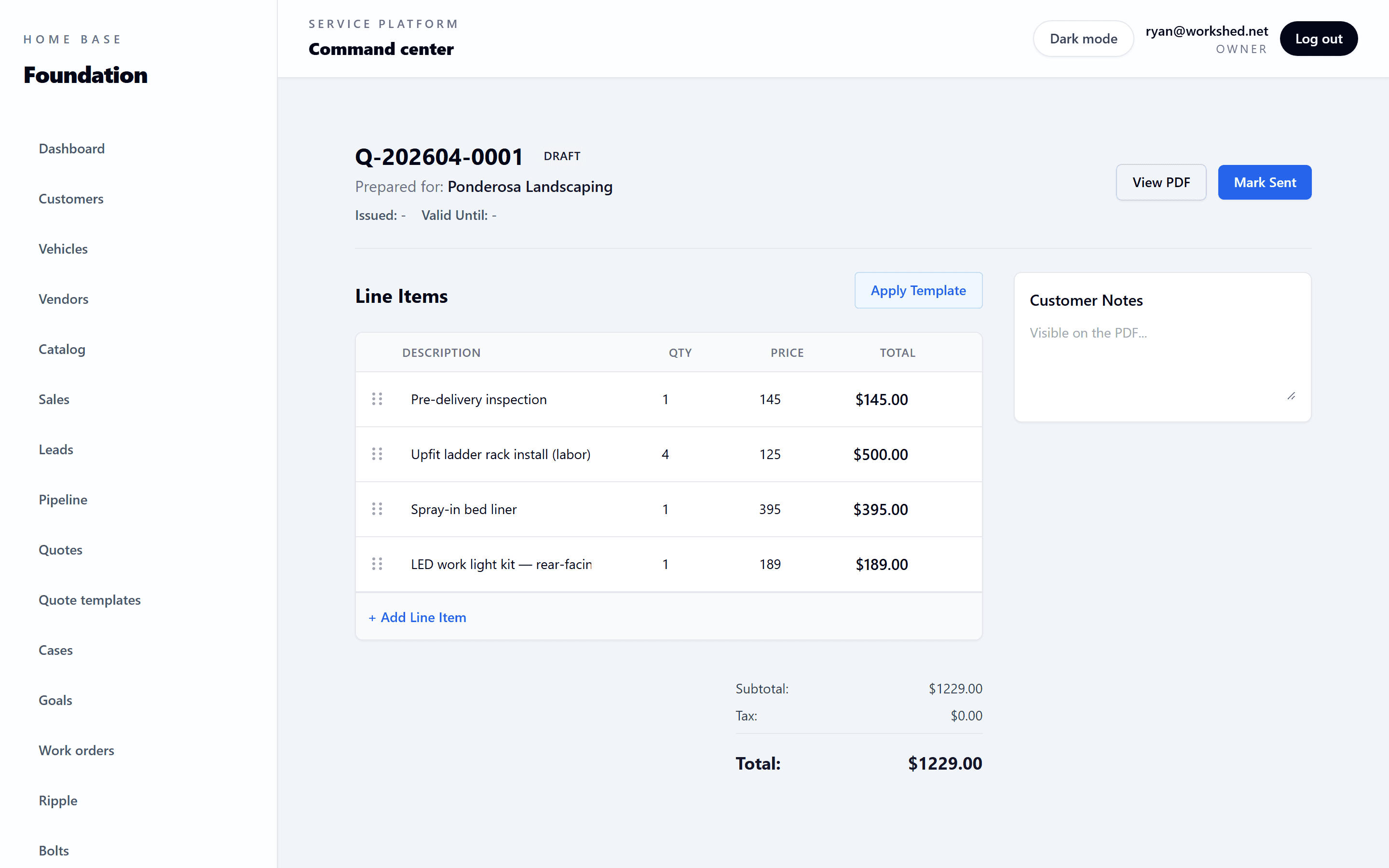
Quotes
Quote context can move toward service instead of becoming a disconnected pre-sale artifact.
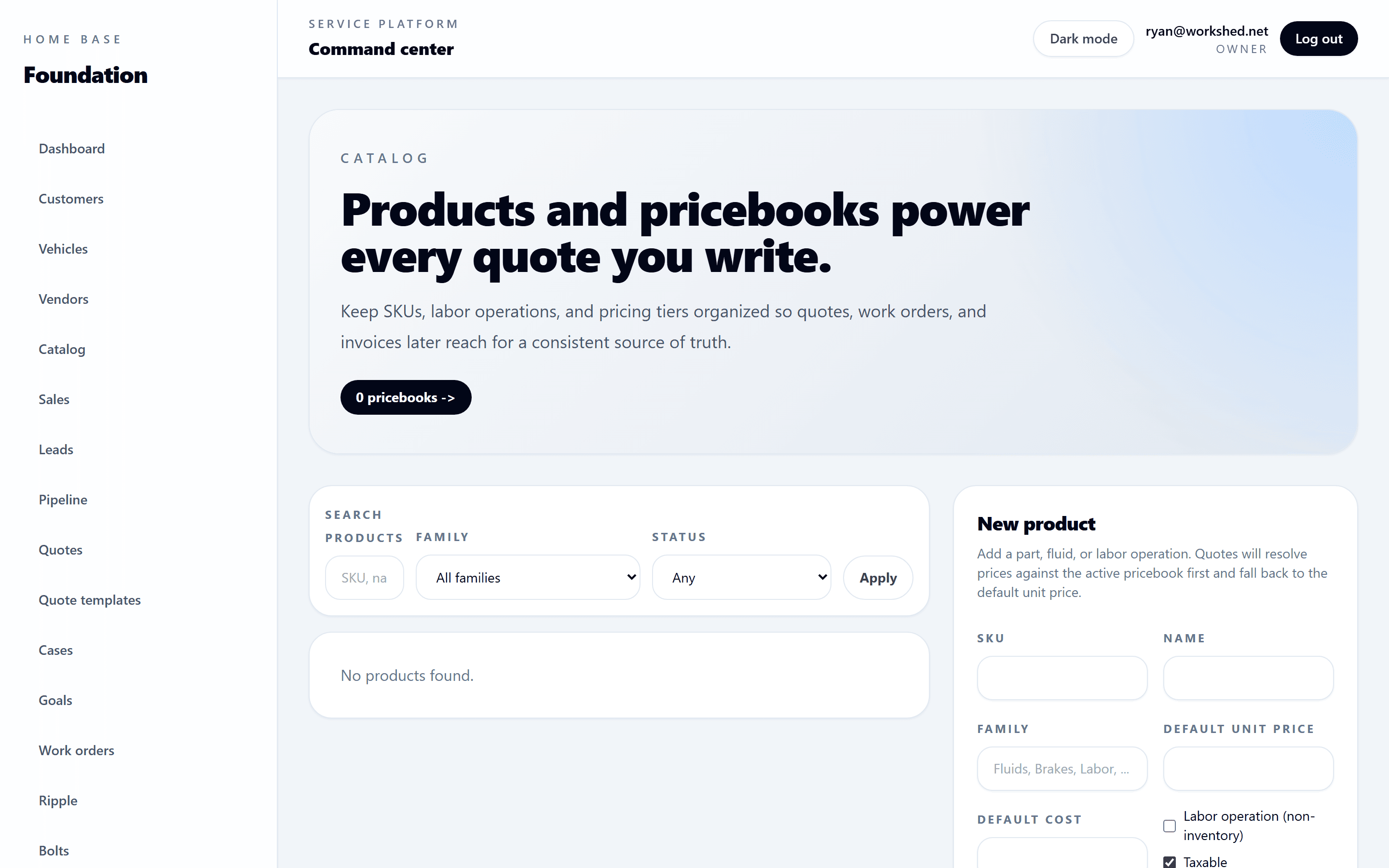
Catalog
The shop can keep recurring parts, labor, and service context where the operational team can use it.
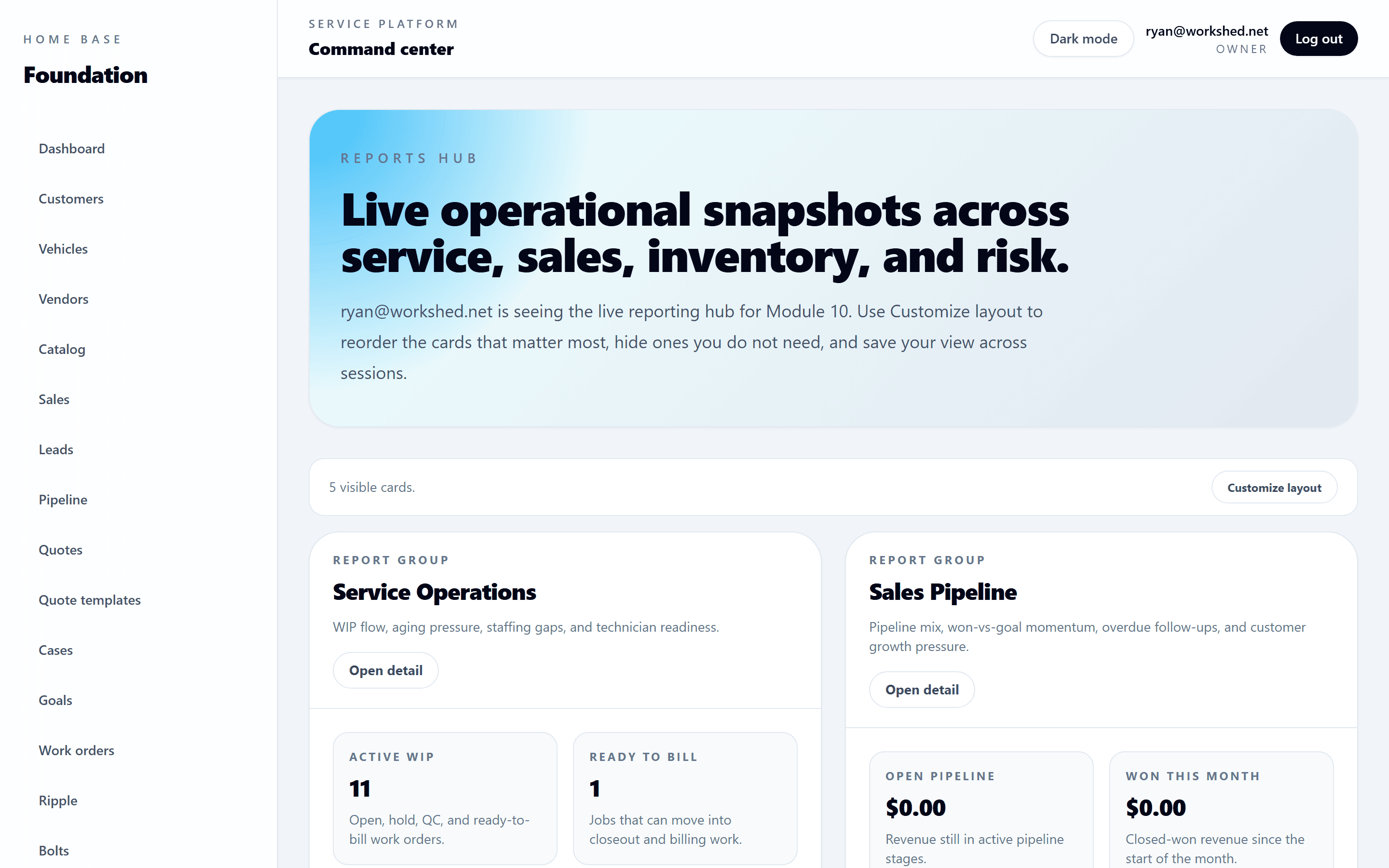
Reports
Reports reinforce the operating model instead of asking managers to trust a second truth source.
Connected spine
Customer context, approvals, notes, and reporting stay attached to the same job instead of getting rebuilt at every step.
A
Home Base keeps the record coherent from the first interaction onward.
B
The handoff from sales into service should feel deliberate and traceable rather than accidental or manual.
C
Approvals, updates, uploads, and Lens shares should feel like part of the job itself, not a detached outreach layer.
D
Managers should not need a second truth source to understand how the shop is actually performing.
Module stack
Every layer should feel adjacent to the next. That continuity is part of the product value, not just navigation.
Why it matters
The point is a cleaner operation, not a longer module list.
Leads, opportunities, quotes, templates, cases, and follow-up activity in one connected customer timeline.
Work orders, bays, estimates, change orders, parts, inspections, time tracking, and warranty flow.
Magic-link portal access, mobile-first approvals, uploads, status tracking, and two-way messaging.
Record, upload, process, and share repair explanations and walkarounds with a customer-ready viewer.
Ask questions over live shop data, draft operational content, and confirm high-trust actions before anything changes.
Role-aware dashboards plus service, sales, parts, and financial closeout views that reflect actual shop work.
Replacement story
The message is not disruption for its own sake. It is replacing fragmented workflows with a clearer operating center while preserving the shop realities that matter.
The site can responsibly suggest that Home Base consolidates common fragments without overpromising specific migrations.
The better message is not disruption for its own sake. It is clarity without losing how shops actually work.
Platform FAQ
What Home Base is, what it replaces, and how to think about the modules without turning this into a feature spreadsheet.
Because that phrase is accurate but forgettable. The stronger message is the connected operating model: run the work, explain the work, and understand the work from the same system.
That each module feels like part of one shop workflow. Module depth matters, but continuity is what makes the platform memorable.
Operationally specific, not infrastructure-specific. Buyers should feel that the product understands the shop, not that it wants to explain implementation details.